
How to Remove Red Wine From a Couch
Short answer: Blot up as much wine as you can immediately with a clean white cloth, working from the outside of the spill inward, and never rub. Cover the damp area with table salt or baking soda to draw out moisture, let it sit, then vacuum it off. Follow with a barely damp cloth and a drop of mild dish soap, blotting and rinsing by dabbing. Test everything on a hidden spot first.
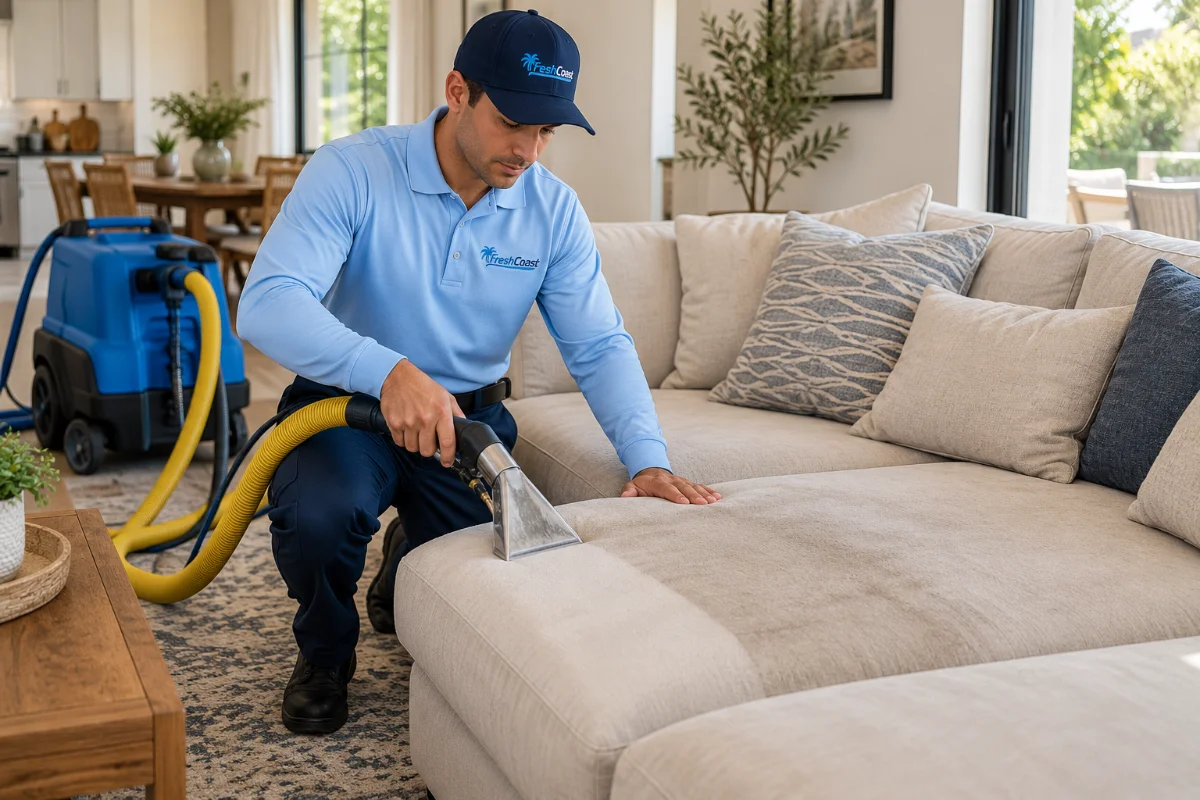
This guide is for anyone staring at a fresh red wine spill on their sofa and wondering what to do in the next ten minutes. You will learn the steps that give a fresh spill its strongest chance, the mistakes that turn a small spill permanent, and how to tell when DIY has lost.
The first ten minutes matter most
Red wine is a tannin stain, and tannins bond with fabric fibers more tightly the longer they sit and the warmer they get. A spill blotted within minutes often lifts almost completely; left overnight in a warm room, it can leave a pink shadow that never fully leaves. Speed matters more than which product you reach for.
Start by blotting, not wiping. Press a clean white cloth or stack of paper towels straight down onto the spill and lift. Repeat with fresh sections of cloth until no more color transfers. Rubbing spreads the wine outward and pushes it deeper into the weave, which is exactly what you do not want. Work from the outside edge of the spill toward the center so you do not enlarge it.
Salt or baking soda: the safe first treatment
Once you have blotted up the liquid, cover the damp area generously with table salt or baking soda. Both draw moisture and pigment up out of the fabric as they sit. Leave it for 15 to 30 minutes; you will see the salt take on a pink tint as it works. Then vacuum it up thoroughly.
This step is genuinely safe on almost any fabric: no chemicals, no added moisture, nothing to test. It will not finish the job on its own for a serious spill, but it pulls out a surprising amount of pigment and buys you time. Avoid colored napkins or printed paper towels; their dyes can transfer to damp fabric.
The dish-soap step, done carefully
After the salt step, mix a drop or two of plain mild dish soap into a cup of cool water. Dab at the stain with a clean white cloth dampened in the solution and wrung well, then rinse by dabbing with a second cloth dampened in plain cool water. Repeat the soap-and-rinse cycle a few times, using light pressure. The goal is to lift residue, not soak the cushion.
Before any of this, test the soap solution on a hidden spot, like the back of the sofa or under a cushion, and check for color change once dry. If the fabric has an S cleaning code, stop here: S means solvent only, and water can leave marks or cause shrinkage. For W or WS codes this method is usually safe. Let the area air dry completely before judging, since damp fabric always looks darker.
What never to do with a wine spill
Do not use hot water or a hair dryer on high heat. Heat sets tannin stains permanently, turning a cleanable spill into a fixed one. Cool or lukewarm water only. Do not use bleach, hydrogen peroxide or oxygen cleaners untested; they can strip color from the fabric along with the stain.
Do not pour white wine on red wine. It is a persistent myth and it just adds more liquid and sugar to the problem. Do not scrub with a brush either; aggressive scrubbing distorts the weave and can leave a fuzzy patch that looks worse than a faint stain. And do not reach for a rented carpet machine on a sofa: too much water, wrong tool, and cushions that stay damp for days.
When the spill has dried or set
If you are reading this the morning after, the approach changes. Dried wine has bonded with the fibers, and aggressive DIY is more likely to damage the fabric than remove the stain. You can still try the cool-water dish-soap method gently, but set your expectations: old wine stains usually lighten rather than disappear.
This is the point where honesty saves the sofa. A professional can pre-treat tannin stains with the right chemistry and extract with controlled moisture, and will tell you upfront what is realistic. What a professional cannot do is reverse a stain that heat or bleach has already set. If someone already tried hot water or peroxide and the spot is still there, say so when you call; it changes what is possible.
Keeping the next spill from becoming a stain
Red wine and light sofas are a risky pairing, and the simplest protection is distance: keep glasses on coasters and side tables, not on the arm of the couch. Washable throw blankets over the seat cushions catch most party spills before they reach the upholstery.
After any professional upholstery cleaning, consider having fabric protector applied. It does not make fabric stain-proof, but it buys you time: spills bead on the surface for a few minutes instead of soaking in immediately, which is often the difference between a quick blot and a permanent mark.
Do
- Blot immediately with a clean white cloth, pressing straight down
- Work from the outside of the spill toward the center
- Test any soap solution on a hidden spot first
- Let the area air dry fully before judging the result
Do not
- Rub or scrub the spill, which spreads it and damages the weave
- Use hot water, heat or a hair dryer on the stain
- Pour white wine, bleach or peroxide on the spill untested
- Soak the cushion with a rented carpet machine
When it makes sense to call a professional
Call a professional when the spill has dried and your gentle attempts have not moved it, when the fabric has an S cleaning code (solvent only, no water), or when the sofa is light-colored, expensive or delicate enough that a wrong move costs more than the visit. A technician pre-treats tannin stains, extracts with controlled moisture, and tells you honestly whether the mark will lift or only lighten. DIY is the right move for a fresh spill on a W or WS coded fabric when you act within minutes and test first.
Questions people ask
Does salt really help with red wine on a couch?
Yes, as a first step. Salt and baking soda draw liquid and pigment up out of damp fabric. They will not finish the job alone on a serious spill, but they safely remove a lot of color before you move to soap and water.
Can red wine come out of a white sofa?
Sometimes, if you act within minutes. White fabric shows every trace, so even a faint pink shadow is visible. Fast blotting plus the salt and soap steps give the strongest chance; dried wine on white fabric often leaves a permanent faint mark.
Is it safe to use a carpet stain spray on my couch?
Only if the fabric's cleaning code allows water-based cleaners and you test first. Many sprays are made for carpet, not upholstery, and some contain bleaching agents. When in doubt, stick to dish soap and water.
Will the stain look worse before it looks better?
Often the area looks darker while damp, which is normal. Judge the result only after the fabric has dried completely, which can take a few hours.
What if someone already used hot water on the stain?
Heat can set tannin stains permanently. A professional may still be able to lighten it, but be upfront about what was tried so the technician sets honest expectations.
Related services and guides
Want it done for you?
Tell us what you have and where. We will call you with a price.
(714) 244-2772Call or text · Open 7 days, 8am–5pm
- Same-day slots most days
- In-house technicians only
- Price confirmed before we start