
How to Get Pet Urine Smell Out of a Sofa
Short answer: Start by finding every spot with a UV flashlight in a dark room; old urine glows and you will miss spots by nose alone. Blot up anything fresh, then apply an enzyme-based pet cleaner according to its label and let it dwell for the full recommended time. Do not soak the cushion and skip ammonia-based cleaners. If the smell returns on humid days, the urine went deeper than DIY can reach.
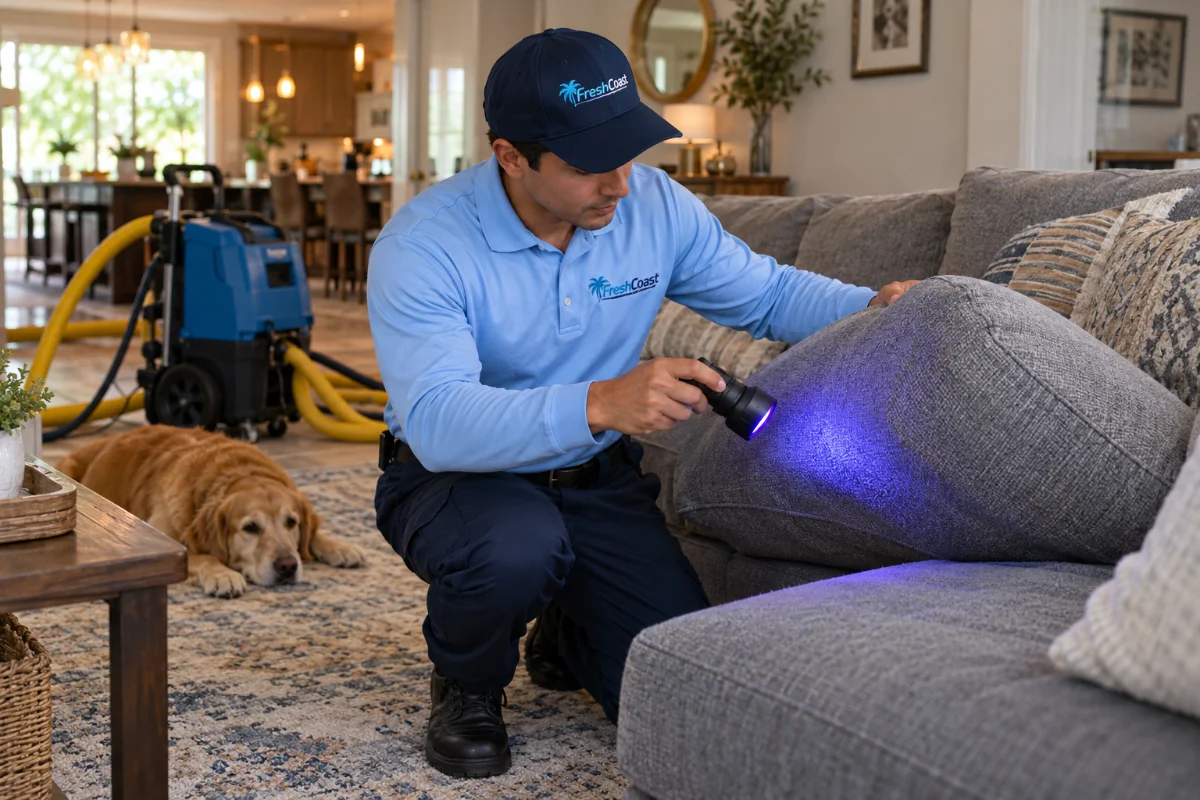
This guide is for pet owners dealing with that unmistakable smell in the couch. You will learn how to find every affected spot (most people miss half of them), the enzyme treatment that actually breaks urine down instead of masking it, the mistakes that make the problem worse, and how to tell when the urine has gone deeper than home methods can reach.
Step one: find every spot with a UV light
The biggest reason DIY odor removal fails is missed spots. Urine dries invisible, and noses adapt quickly, so owners treat one cushion while three others hold old deposits. A UV or blacklight flashlight, used in a fully dark room, makes dried urine glow a yellow-green. Sweep it slowly over seats, arms, sides and the back of the sofa.
Mark each glowing spot with a small piece of painter's tape so you can find them again with the lights on. Check under loose cushions and along seams, where liquid runs and collects. This ten-minute search is the most valuable part of the whole job. Treating every spot once beats treating one spot five times.
Blot fresh, then use an enzyme cleaner
For a fresh accident, blot up as much liquid as possible first with clean white towels, pressing firmly and standing on the towel if needed to reach deeper. Then apply an enzyme-based pet stain and odor product, following the label exactly. Enzyme cleaners work by breaking down the urine compounds biologically, which is why they succeed where soap and water only dilute.
The dwell time on the label matters: enzymes need time, often 10 to 15 minutes or more, and keeping the area damp during that window helps them work. Covering the treated spot with a damp towel can keep it from drying out too fast. Afterward, blot up the excess and let the area air dry completely. Do not use the sofa until it is dry.
What to avoid: the usual mistakes
Skip any cleaner containing ammonia. To a pet's nose, ammonia smells similar to urine, which can draw the animal back to the same spot. Also skip vinegar as an odor cure here: it may freshen briefly, but it does not break down urine compounds, and on some fabrics it can affect dyes.
Do not soak the cushion trying to flush the urine out. Upholstery cushions are not carpet; excess water travels down into the filling where it dries slowly and can grow musty, adding a second smell to the first. Do not use heat to speed drying on a treated spot either. And do not trust scented sprays as a fix: they mask odor for a day and leave the urine compounds exactly where they were.
Why the smell comes back on humid days
This is the frustrating part owners ask about most. Urine that soaked past the fabric into the cushion filling can seem gone after surface treatment, then return when humidity rises. Moisture in the air reactivates the dried urine salts deep inside, and the smell wicks back up through the fabric. If the odor fades after cleaning but returns every humid spell, that is what is happening.
Surface products cannot reach that deep, no matter how good the label sounds. The honest options are professional deep extraction, which pulls moisture and residue from deeper in the cushion, or in severe cases accepting that the cushion filling itself holds the problem. A technician with a UV light will show you exactly how deep it goes before any work starts.
What a professional does differently
A professional starts the same way you should: UV light, every spot marked. The difference is the equipment and chemistry. Enzyme pre-treatment gets agitation and dwell time, then a hand tool extracts with controlled low moisture, pulling the broken-down residue out instead of leaving it in the cushion. Multiple extraction passes matter more than stronger chemicals.
A good technician is also honest about limits. If urine has soaked through repeatedly over months, the dyes in the fabric may have changed color permanently, and deep filling may hold odor that extraction reduces but does not erase. We would rather tell you that before starting than after. Ask for the UV walkthrough so you see the full picture first.
Keeping it from happening again
The practical defenses are unglamorous but effective. Washable furniture covers on the pet's favorite seat catch most accidents before they reach the upholstery. More frequent outdoor breaks, especially for senior pets, prevent the accidents that cause the worst damage. Clean any new accident the same day: fresh urine is dramatically easier to fully remove than week-old urine.
If one cushion has become the repeat target, consider having just that area professionally treated rather than waiting for a whole-sofa clean. And keep a UV flashlight in the house. A quick monthly sweep in the dark catches new spots while they are still fresh enough for your enzyme cleaner to handle completely.
Do
- Find every spot with a UV flashlight in a dark room first
- Use an enzyme-based pet cleaner and follow the dwell time on the label
- Blot fresh accidents immediately with firm pressure
- Let treated areas air dry completely before using the sofa
Do not
- Use ammonia-based cleaners, which can draw pets back to the spot
- Soak the cushion trying to flush urine out with water
- Mask the smell with scented sprays instead of treating the source
- Use heat to speed-dry a treated area
When it makes sense to call a professional
Call a professional when the smell persists after proper enzyme treatment, when it returns on humid days (a sign it reached the cushion filling), when multiple spots or an old accident are involved, or when the sofa is light-colored or delicate. Professional UV inspection plus enzyme treatment and extraction reaches deeper than home methods and comes with an honest assessment of what will fully clear. DIY is the right call for a fresh, single accident treated the same day with an enzyme product and full dwell time.
Questions people ask
Will the smell ever fully go away?
Often yes, if the urine stayed in the fabric and you treat every spot with an enzyme cleaner. If it soaked deep into the cushion filling over time, professional extraction usually reduces it greatly, though severe long-term cases may never clear completely.
Does vinegar remove pet urine smell from a couch?
Not really. Vinegar can freshen briefly, but it does not break down the urine compounds that cause the smell. An enzyme-based product made for pet urine does the actual work.
Why does my dog keep peeing on the same cushion?
Dogs return to spots where they still detect urine odor, even when humans cannot smell it anymore. Thorough enzyme treatment of every spot, found with a UV light, breaks that cycle better than surface cleaning.
Can you clean a sofa that a cat has sprayed?
Usually yes with enzyme treatment and extraction, though cat urine is stronger and sets faster than dog urine. The sooner it is treated, the better the outcome. Be honest about how long it has been there when you call.
Is it safe to use enzyme cleaners on all fabrics?
Most are safe on washable fabrics, but always check the fabric cleaning code and test a hidden spot first. On S-coded (solvent only) fabrics, skip water-based products and call a professional instead.
Related services and guides
Want it done for you?
Tell us what you have and where. We will call you with a price.
(714) 244-2772Call or text · Open 7 days, 8am–5pm
- Same-day slots most days
- In-house technicians only
- Price confirmed before we start