
How Often Should You Clean Your Upholstery?
Short answer: For most households, a professional upholstery cleaning every 12 to 18 months keeps sofas and chairs looking even and smelling fresh. Homes with kids, pets or light-colored fabric usually need it every 6 to 12 months instead. The real test is not the calendar: darkened armrests, uneven seat color and a faint stale smell all mean the piece is due now.
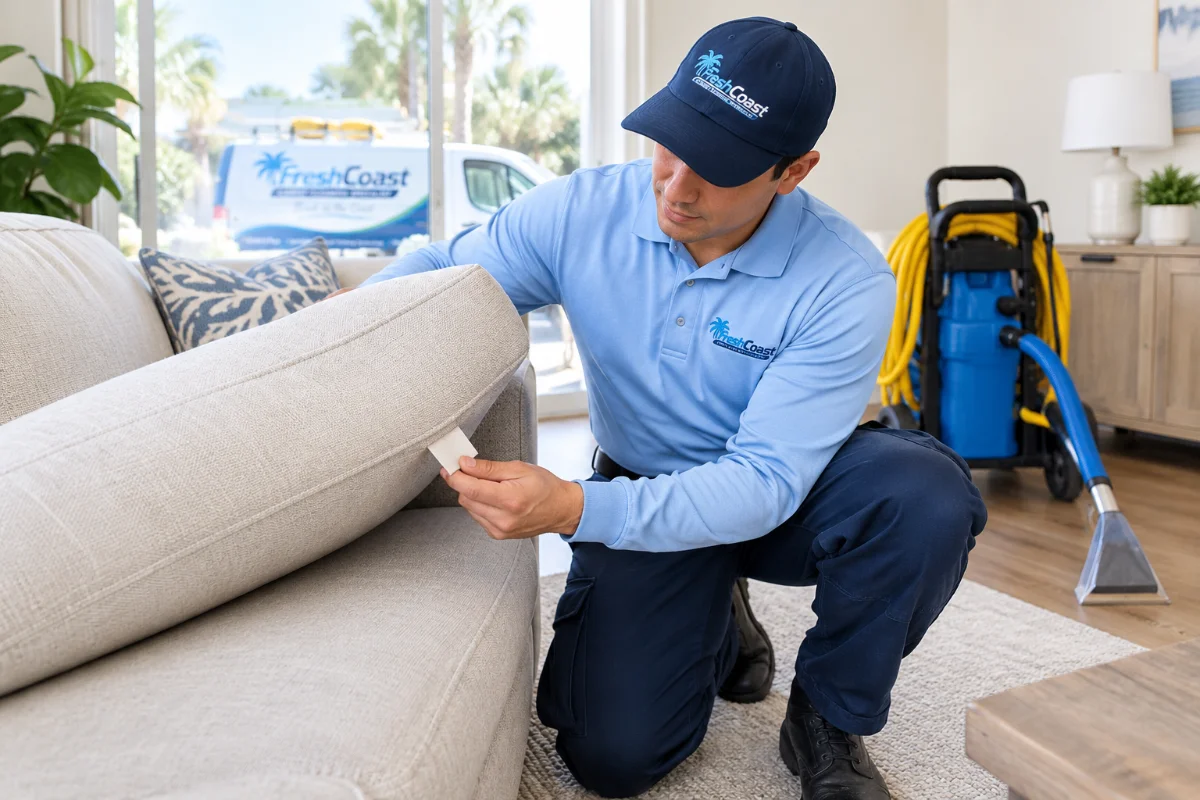
Wondering whether your sofa is due for a cleaning or can safely wait? You will learn what actually sets the pace (use, not the calendar), the visible signs that mean a piece needs attention now, and a simple schedule matched to your household. No scare tactics, just what we see in real homes across Orange County.
The honest answer: it depends on use, not the calendar
A sofa in a formal living room that seats guests twice a year can go two years between cleanings without any problem. The same sofa in a family room with two kids and a dog is a different story: body oil, food and tracked-in soil work into the fabric every single day. Match the cleaning to the traffic the piece actually gets.
That is why a good technician looks at the piece, not the calendar. The favorite seat tells you everything. If it is visibly darker than the cushion nobody sits on, soil has built up past what vacuuming removes. At that point a professional clean brings the color back to even; wait much longer and the difference can become permanent shading.
Signs your upholstery is due right now
You do not need a schedule if you know what to look for. Darkened armrests and headrests come first: skin oils collect exactly where hands and heads rest, and they oxidize into a dull gray film. Run your hand over the arm; if it feels slightly tacky or looks darker than the seat cushions, that is oil buildup, not wear.
The second sign is uneven color across the piece. Lift a throw pillow and compare the fabric underneath to the exposed seat. A visible rectangle means soil has settled in. The third sign is smell. Upholstery absorbs cooking odors, pet odor and everyday staleness slowly, so owners often stop noticing. If it smells stale after the room has aired out, it is due.
Kids and pets move the schedule up
Children and pets do not just add soil, they add kinds of soil that set faster. Juice and food acids, muddy paws, pet oils and the occasional accident all bond with fabric more aggressively than ordinary adult use. With young kids or indoor pets, every 6 to 12 months is the realistic rhythm for the hardest-used pieces.
This is not about being fussy. Pet urine and food spills that sit for months become permanent color changes rather than removable stains. A regular schedule catches them while they are still cleanable. Between professional visits, vacuum the high-use pieces weekly and treat spills the day they happen: blot, never rub, and test any cleaner on a hidden spot first.
Light fabrics show soil sooner
A cream or light gray sofa can need cleaning twice as often as a dark patterned one holding the same amount of soil, simply because you can see it. This is cosmetic more than structural: light fabric does not attract more dirt, it just hides less of it. With light upholstery, plan on the shorter end and consider fabric protector after each professional clean.
Patterned and darker fabrics are more forgiving, which genuinely helps in busy homes. But do not let that fool you into skipping cleanings entirely. Soil you cannot see still grinds into the weave every time someone sits down, and it quietly shortens the fabric's life. Visible or not, a 12 to 18 month rhythm is a reasonable default for everyday pieces.
What waiting too long actually costs
Soil does not just sit on fabric, it works into it. Every time someone sits, body weight grinds the day's dust and oil deeper into the weave, where it abrades the fibers. Over years this thins the fabric in the favorite seats. Cleaning removes the soil, but it cannot rebuild worn fibers. Regular cleaning is fabric maintenance, not just appearance.
Set stains are the other cost. A spill that would have lifted cleanly in the first month becomes a permanent shadow after a year of heat, light and traffic pressing it in. Some stains lighten but do not vanish, and the longer they sit, the truer that gets. The schedule below is built around cleaning while soil is still soil.
A simple schedule you can actually follow
Use this as a starting point and adjust by what you see. Formal or guest-only pieces: every 18 to 24 months. Everyday family sofas and chairs: every 12 to 18 months. Homes with kids, pets or light fabric: every 6 to 12 months. Rental turnovers: between tenants, whatever the calendar says. Fresh stains or new pet odor: as soon as you can, while the soil is still fresh.
Between visits, two habits do most of the work. Vacuum upholstery monthly with the upholstery attachment, reaching into seams and under cushions where crumbs collect. Rotate and flip loose cushions every few months so wear spreads evenly instead of concentrating on the favorite seat. Those two habits can easily stretch a 12-month schedule without the piece looking tired.
Do
- Vacuum upholstery monthly, including seams and under cushions
- Blot spills the day they happen, working from the outside in
- Test any cleaner on a hidden spot before using it on a visible area
- Rotate and flip loose cushions every few months for even wear
Do not
- Wait until the color difference between cushions is dramatic
- Rub stains, which spreads them and can damage the weave
- Use bleach or harsh cleaners on upholstery fabric
- Assume dark fabric needs no cleaning because the soil is hidden
When it makes sense to call a professional
The main reason to call is routine maintenance: even soil across a well-used piece, darkened arms, or a long-delayed schedule. Professional extraction reaches the soil that vacuuming and rental machines leave behind, and the fabric-code check keeps the method safe for the textile. DIY is enough for a fresh spill on a washable fabric and for weekly vacuuming. Call when stains have set, when pet odor lingers after your own cleaning attempts, or when the piece is large, light-colored, or made of a delicate fabric you do not want to risk.
Questions people ask
Is once a year too often for sofa cleaning?
For a busy family sofa it is about right; with pets or kids it can be the minimum. A rarely used guest-room chair can wait much longer. Match the schedule to the use.
Does cleaning wear out upholstery faster?
No. Proper low-moisture cleaning with the right method for the fabric does not wear it out. The soil left sitting in the fabric does far more damage through abrasion than cleaning ever does.
Can I just vacuum instead of professional cleaning?
Vacuuming is important maintenance that removes surface soil and crumbs, but it cannot lift the body oil and ground-in soil bonded to the fibers. Think of vacuuming as daily care and professional cleaning as the deeper reset.
How do I know if a stain is too old to clean?
You cannot always tell by looking, which is why a technician tests first. As a rule, stains older than a few months, especially food, wine and pet urine, are more likely to lighten than vanish completely.
Should rental sofas be cleaned between tenants?
Yes. Turnover cleaning resets the piece for the next tenant and photographs far better for listings. It also catches pet odor and stains before they set permanently.
Related services and guides
Want it done for you?
Tell us what you have and where. We will call you with a price.
(714) 244-2772Call or text · Open 7 days, 8am–5pm
- Same-day slots most days
- In-house technicians only
- Price confirmed before we start