
Cleaning a Fabric Sectional: DIY or Call a Professional?
Short answer: DIY works for a sectional with light, even soil and a W or WS cleaning code: vacuum thoroughly, clean in small even sections with a barely damp cloth, and dry uniformly with airflow. The challenge is scale: getting six or more cushions to dry the same shade by hand is genuinely difficult. Call a professional for large, light-colored or stained sectionals, or any S-coded fabric.
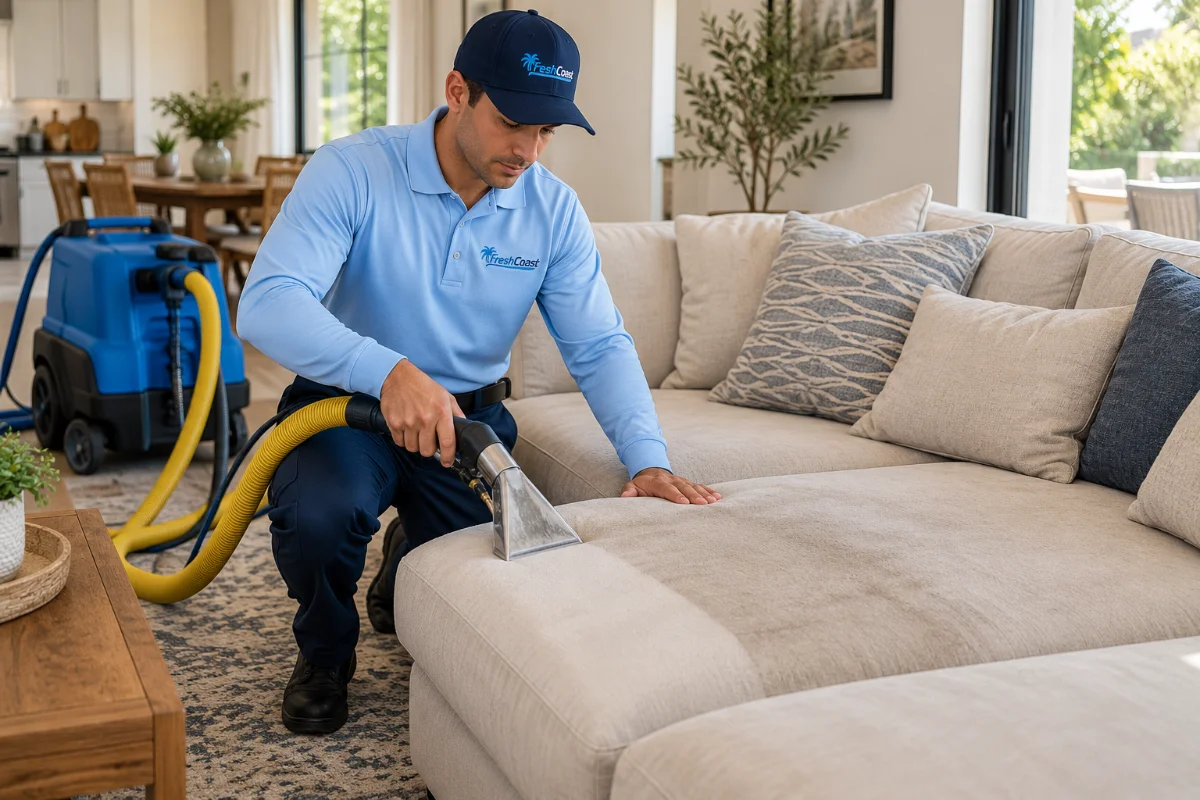
This guide helps you make the call on your sectional: tackle it yourself or bring in a pro. You will learn why sectionals are harder than they look, a safe DIY method if you go that route, the mistakes that cause patchy results, and the situations where professional extraction earns its keep.
Why sectionals are harder than they look
A sectional is not one piece of furniture, it is six to ten upholstered surfaces that must all match when dry. Every cushion you clean slightly differently dries a slightly different shade, and the eye catches the patchwork immediately. This evenness problem is the number one reason DIY sectional jobs disappoint, even when each cushion is technically clean.
Size also multiplies every other risk. More fabric means more chances of water rings, more drying time, and more fatigue, which leads to rushed final cushions. A loveseat forgives inconsistency. A large L-shaped sectional in a light fabric does not. Be realistic about the piece you own before deciding.
The safe DIY method, step by step
First, read the cleaning code on every section; large sectionals sometimes mix codes. Vacuum everything thoroughly with the upholstery attachment, including seams and under cushions, then dry-brush the nap. Mix a small amount of mild dish soap into cool water, or use an upholstery cleaner matched to the code.
Work one cushion at a time with a barely damp white cloth, wrung nearly dry, wiping in one direction with overlapping passes. Rinse with a second cloth dampened in plain water. The critical discipline: use the same pressure, same dampness and same number of passes on every cushion. Set up fans for uniform drying across the whole piece. Judge the result only when everything is fully dry, which takes a few hours.
Mistakes that cause patchy results
The classic error is cleaning only the dirty cushions. Spot-cleaning the favorite seat while leaving the rest creates a visible contrast that looks worse than the original uniform soil. If you DIY, commit to the whole sectional or do not start. Partial cleaning is the most common regret we hear about.
Other mistakes: using too much water on early cushions and too little on later ones as arms tire, letting one side air-dry while the other gets fan drying, and cleaning in direct sunlight where sections dry at different rates. Water rings on microfiber are the usual punishment for uneven moisture. Consistency across the entire piece matters more than the product you choose.
When a professional is worth it
A professional's advantage on a sectional is uniformity. The hand tool applies and extracts solution in one pass with the same pressure across every cushion, so the whole piece dries one even color. Pre-treatment goes on the high-traffic zones first, then the full clean evens everything out. For large or light-colored sectionals, that uniformity is difficult to achieve by hand.
Call when the sectional is large, light-colored, stained, holding pet odor, or coded S. Also call when it is the centerpiece of the room: the more visible the piece, the more patchiness costs you. A technician also checks the code and tests first, which matters on sectionals where one wrong method affects ten cushions instead of two. Confirm the price for the whole piece before work starts.
What to ask before you book
Ask what method they use on upholstery: you want low-moisture hand-tool extraction, not a carpet wand. Ask how they handle the code check and whether they test a hidden spot first. Ask what dry time to expect; a few hours is normal, and anything suggesting days indicates too much water.
Ask whether pre-treatment of high-traffic areas is included or extra, and get the price for the entire sectional confirmed before work starts, not per cushion. A reputable company answers all of this plainly. Vague answers about method or pricing are a reason to keep looking.
Do
- Read the cleaning code on every section before starting
- Vacuum and dry-brush the whole piece before any wet step
- Use the same pressure and dampness on every cushion
- Dry the entire sectional uniformly with fans or airflow
Do not
- Clean only the dirty cushions and leave the rest
- Use a rental carpet machine on the sectional
- Let sections dry at different rates or in direct sun
- Start a DIY clean on S-coded fabric with water-based methods
When it makes sense to call a professional
DIY fits a W or WS coded sectional with light, even soil when you can commit to the whole piece with consistent technique and uniform drying. Call a professional for large sectionals, light fabrics, set stains, pet odor, S-coded pieces, or any sectional where patchiness would bother you. The pro advantage is evenness across many cushions, and that is exactly what is hardest by hand. When in doubt, get a quote first; knowing the price makes the decision easier.
Questions people ask
Can I clean just the dirty cushions on my sectional?
It is not recommended. Spot-cleaned cushions dry a different shade than the rest, creating a patchwork look. Either clean the whole sectional evenly or leave it for a professional full clean.
How much water is too much on a sectional?
If the fabric feels wet rather than damp to a firm press, that is too much. Cloths should be wrung nearly dry. Excess water causes rings, long dry times and potential mustiness in the cushions.
Should I remove the cushion covers to wash them?
Only if the tag specifically allows machine washing. Many covers shrink or lose shape in the wash even when the fabric looks washable. When in doubt, clean them on the cushion.
How do professionals keep sectionals even?
The extraction hand tool applies and removes solution in one consistent pass across every cushion, with the same pressure throughout. Pre-treatment evens out the high-traffic zones first, so the final result dries uniform.
Is it cheaper to DIY a sectional?
Upfront, yes. But factor in your time, the cost of products, and the risk of patchy results that need a professional fix anyway. For large or light sectionals, the pro job is often the better value.
Related services and guides
Want it done for you?
Tell us what you have and where. We will call you with a price.
(714) 244-2772Call or text · Open 7 days, 8am–5pm
- Same-day slots most days
- In-house technicians only
- Price confirmed before we start