
Can You Steam Clean a Microfiber Couch?
Short answer: Usually yes, but only if the fabric cleaning code allows it. Couches coded W or WS can handle careful low-moisture cleaning, while S-coded microfiber must stay dry and water will leave marks. The classic mistake is using too much water: microfiber shows water rings badly. A light, even application with thorough drying gives the most even result.
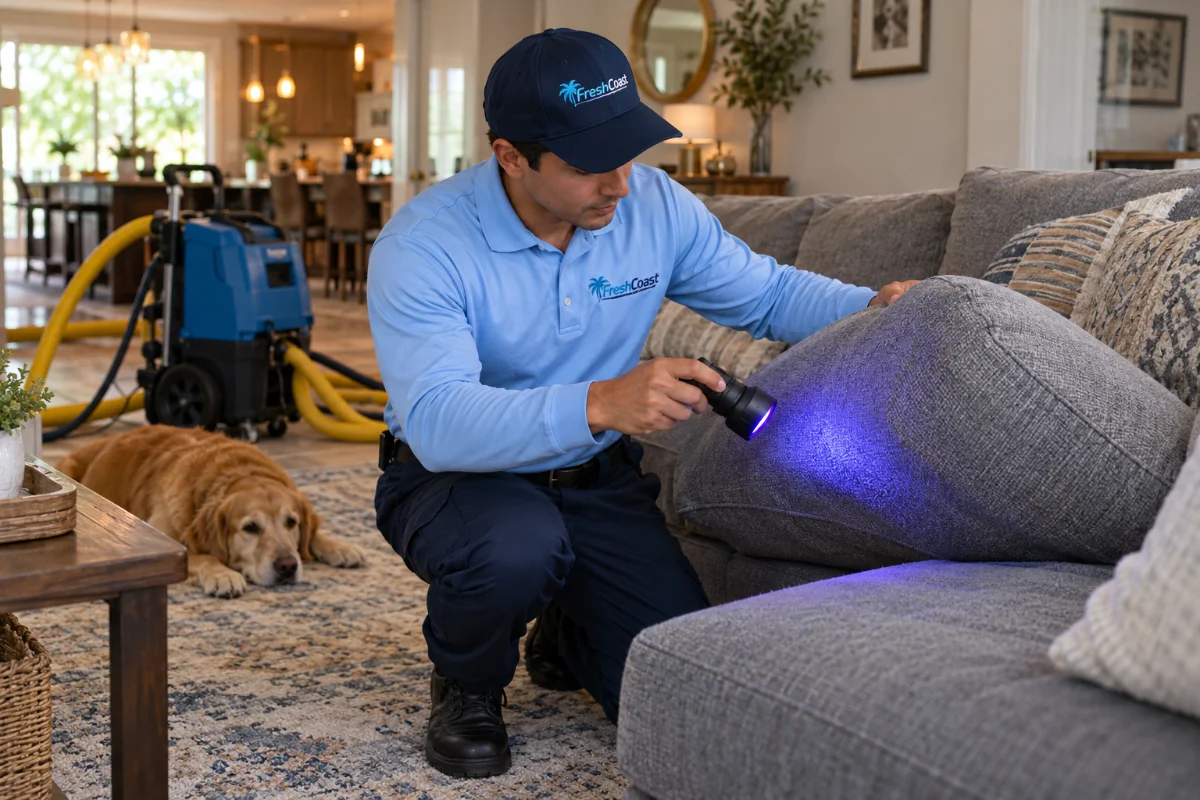
This guide answers one of the most searched upholstery questions honestly. You will learn what the cleaning code on your microfiber couch actually means, why water marks are the real enemy (not the steam itself), a safe DIY method for washable microfiber, and when to hand the job to a professional with the right extraction equipment.
What the cleaning code means for microfiber
Every upholstered piece has a tag with a cleaning code, usually under a seat cushion. W means water-based cleaners are fine. WS means either water or solvent methods work. S means solvent only, no water. X means vacuum only, no cleaning agents at all. Find this tag before you do anything else.
Most microfiber sold for family use is coded W or WS, which is why people assume water is always safe. But plenty of microfiber, especially on higher-end or imported pieces, carries an S code. On S-coded microfiber, even a damp cloth can leave a visible water mark or cause the fibers to stiffen. The tag decides the method, not the fabric name. No tag? Treat it as S and test carefully, or call a professional.
Why microfiber and water are a tricky pair
Microfiber's ultra-fine fibers are excellent at grabbing soil, which is why the fabric is popular. That same structure makes it show water marks: when one area gets damp and dries at a different rate than the surrounding fabric, it leaves a visible ring. This is the number one DIY complaint with microfiber, and it happens with plain water, not just cleaners.
The fix is evenness. Whatever moisture you apply must go on evenly and dry evenly. That means working in sections with consistent pressure, overlapping slightly, and then drying the whole area uniformly with airflow rather than letting one patch air-dry while the rest stays damp. Professionals avoid the ring problem with extraction equipment that applies and removes moisture in one pass.
A safe DIY method for W-coded microfiber
Start by vacuuming thoroughly with the upholstery attachment, then go over the fabric with a dry soft-bristle brush to lift the nap. Mix a small amount of mild dish soap or a dedicated upholstery cleaner into cool water. Dampen a clean white cloth, wring it until it is barely moist, and wipe in one direction in overlapping sections.
Follow immediately with a second cloth dampened in plain water, wrung just as dry, to rinse. Then set up airflow: a fan pointed at the sofa, or open windows on a dry day. The fabric should feel dry within an hour or two. If any water rings appear as it dries, lightly re-dampen the entire panel evenly and dry it again with the fan; evening out the moisture usually erases the ring.
What about rental machines and steam mops
Rental carpet machines are the wrong tool for a microfiber couch. They lay down far too much water for upholstery, and microfiber plus excess water equals rings, stiff fibers and cushions that stay damp for days. Steam mops are worse: the direct heat can distort synthetic fibers and set any stains present.
True professional upholstery cleaning is not a steam mop either. It is hot water extraction through a small hand tool: heated solution goes in and gets vacuumed straight back out in the same pass, so the fabric gets clean without getting soaked. That controlled moisture is the whole difference. If you are tempted to rent a machine for the sofa, that temptation is usually the sign to call a professional instead.
When to call a professional for microfiber
Call when the code is S or missing, when water rings from a previous attempt need fixing, when the piece is large enough that even DIY application is impractical, or when pet odor or set stains are involved. A technician reads the code, tests a hidden spot, and uses the method the tag allows, including dry methods for S-coded pieces.
Also call when the microfiber is part of a light-colored sectional. Large pale surfaces show every inconsistency, and getting an even result by hand across six cushions is genuinely difficult. Professional extraction keeps the application uniform, which is what prevents the patchy look. Ask for low-moisture extraction specifically, and confirm the price before work starts.
Do
- Find and read the cleaning code tag before using any moisture
- Vacuum and dry-brush the fabric before any wet step
- Wring cloths until barely damp and work in even sections
- Dry with a fan or airflow so the whole area dries uniformly
Do not
- Use a rental carpet machine or steam mop on the couch
- Soak any area, which causes water rings on microfiber
- Use hot water or heat on stains
- Assume all microfiber is washable without checking the code
When it makes sense to call a professional
DIY suits a W or WS coded microfiber couch with light, even soil when you can work in sections and dry uniformly. Call a professional for S-coded or untagged pieces, for water rings left by a previous attempt, for large sectionals where evenness is hard by hand, and for pet odor or set stains. A pro matches the method to the code, extracts with controlled moisture, and tells you honestly if a mark will lift or only lighten.
Questions people ask
Will water ruin my microfiber couch?
Not if the code allows water and you keep it light and even. The danger is too much water or uneven drying, which leaves rings. S-coded microfiber should not get wet at all.
How do I get water rings out of microfiber?
Lightly re-dampen the entire panel evenly with a barely damp cloth, then dry it uniformly with a fan. Evening out the moisture usually erases the ring. If it persists, professional extraction fixes it.
Can I use a clothes steamer on a microfiber couch?
A steamer adds moisture and heat without extraction, which risks water marks and can set stains. It is fine for freshening and de-wrinkling, but not a substitute for cleaning.
What does the S on my couch tag mean?
Solvent only: no water-based cleaners. Use a dry cleaning solvent made for upholstery, or call a professional who has dry methods. Water can leave marks or damage the fabric.
Is microfiber hard to keep clean with kids?
Microfiber actually handles family life well because the tight weave resists liquid penetration. Weekly vacuuming plus prompt blotting of spills keeps it looking good, with professional cleaning every 6 to 12 months for busy households.
Related services and guides
Want it done for you?
Tell us what you have and where. We will call you with a price.
(714) 244-2772Call or text · Open 7 days, 8am–5pm
- Same-day slots most days
- In-house technicians only
- Price confirmed before we start