
Baking Soda and Vinegar on a Couch: Does It Work?
Short answer: Baking soda genuinely helps with odors: sprinkle it on dry fabric, let it sit, and vacuum it off. It absorbs smells but does not clean stains. Vinegar is riskier on upholstery: its acidity can affect dyes and leave its own smell, and it does not disinfect fabric in any meaningful way. For actual soil, neither takes the place of extraction cleaning.
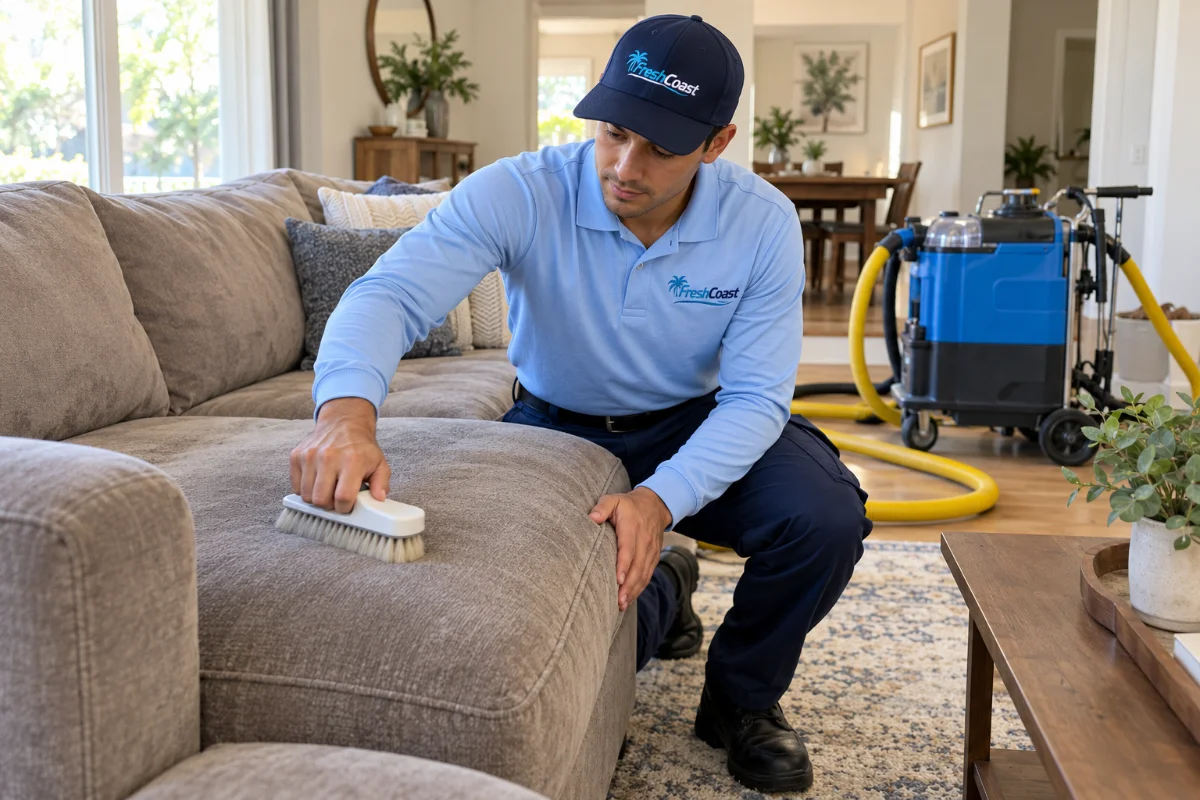
This guide gives you the straight answer on the internet's favorite couch remedies. You will learn what baking soda actually does (and does not do), why vinegar is a gamble on upholstery, the safety rules for both, and what to use instead when the couch needs real cleaning rather than freshening.
Baking soda: good for odor, not for stains
Baking soda (sodium bicarbonate) absorbs odors rather than covering them. Sprinkle a light, even layer over the dry sofa, gently work it in with a soft brush, leave it for 15 to 30 minutes or longer, then vacuum thoroughly with the upholstery attachment. It takes the edge off mustiness, cooking smells and general staleness.
Understand its limits. Baking soda does not dissolve soil, lift stains or sanitize fabric. It is a deodorizer, not a cleaner. It also needs complete vacuuming afterward; residue left in the weave can attract moisture and feel gritty. Used correctly between professional cleanings, it is one of the safest DIY freshening steps you can take.
Vinegar: why it is a gamble on upholstery
Vinegar is an acid, and acids interact with fabric dyes. On some upholstery it is harmless; on others it can lighten or shift colors, especially on natural fibers and darker dyes. It also leaves its own sharp smell until it fully evaporates, which on a sofa cushion can take a while. The cleaning power people attribute to it is mostly the water it is diluted in.
There is one more problem: vinegar gets recommended as a disinfectant, but on porous fabric it does not sanitize in any reliable way. If odor control is the goal, baking soda is safer. If stain removal is the goal, a proper upholstery cleaner matched to the fabric code does the job without the dye risk. Vinegar is more at home on hard surfaces, not your sofa.
The safety rules if you use either
Test first, always. Apply baking soda or diluted vinegar to a hidden spot, let it dry completely, and check for color change or texture change before touching a visible area. This single step prevents most DIY damage. For baking soda, keep the fabric dry; for vinegar, dilute it and use it sparingly.
Never mix vinegar with bleach or products containing bleach. The combination creates toxic chlorine gas, and this warning applies everywhere in the house, not just on the couch. Never mix chemicals generally: one product at a time, rinsed or vacuumed off before the next. And check the cleaning code: on S-coded (solvent only) fabrics, skip water-based DIY entirely, including vinegar solutions.
What actually cleans a sofa
Real cleaning means removing soil from the fibers, not just freshening the surface. That takes three things: the right chemistry for the soil type, agitation to loosen it, and extraction to pull it out. Baking soda provides none of the three. Dish soap and water provide the first two but not the third, which is why DIY spot cleaning sometimes leaves rings.
Professional upholstery cleaning adds the missing piece: a hand tool that applies heated solution and vacuums it straight back out, recovering the dissolved soil instead of leaving it in the cushion. That is why a professionally cleaned sofa looks evenly clean rather than spot-cleaned. Between visits, vacuuming plus baking soda for odor is a solid maintenance routine. When the fabric itself looks dirty, that is extraction time.
A realistic maintenance routine
Here is a routine that actually works for a family sofa. Weekly: vacuum with the upholstery attachment, including under cushions. Monthly: sprinkle baking soda for odor, vacuum thoroughly, and rotate loose cushions. As needed: blot spills immediately and treat with the method your fabric code allows. Yearly or so: professional low-moisture extraction.
This rhythm keeps a sofa presentable for years without drama. The expensive mistakes all come from skipping steps: letting spills sit, grinding soil in for years, then trying to fix it all with a aggressive DIY session. Gentle and regular beats harsh and occasional every time.
Do
- Use baking soda on dry fabric for odor, then vacuum it all off
- Test anything, including vinegar, on a hidden spot first
- Vacuum weekly and rotate cushions as routine maintenance
- Blot spills immediately instead of reaching for home remedies later
Do not
- Expect baking soda to remove stains; it only absorbs odor
- Use vinegar on untested fabric, especially natural fibers or dark dyes
- Mix vinegar with bleach or combine cleaning chemicals
- Treat baking soda or vinegar as a substitute for extraction cleaning
When it makes sense to call a professional
Call a professional when the sofa looks dirty rather than just stale, when odors persist after baking soda treatment, or when stains need more than blotting. Freshening is DIY territory; soil removal is professional territory, and the line between them is visible: if the fabric color looks uneven or darkened, no pantry remedy will fix it. A technician extracts the bonded soil and can apply fabric protector afterward to make future maintenance easier.
Questions people ask
How long should baking soda sit on a couch?
Fifteen to thirty minutes is enough for light freshening; a few hours for stronger odors. Vacuum it completely afterward with the upholstery attachment, going over the area twice.
Can baking soda damage upholstery?
On dry fabric it is very safe, but it must be vacuumed out fully. Residue left in the weave can feel gritty and attract moisture. Keep it away from S-coded fabrics if the code forbids any powder or moisture.
Does vinegar disinfect a couch?
No, not in any reliable way on porous fabric. Vinegar works on some hard surfaces, but upholstery needs extraction cleaning for real soil removal. Do not rely on it for hygiene.
Why does my couch still smell after baking soda?
Baking soda absorbs surface odor, but smells bonded deep in the fibers or cushion filling need extraction. Pet urine odor especially usually needs enzyme treatment plus professional extraction.
Is it safe to mix baking soda and vinegar on fabric?
The fizz looks impressive but does little: the two neutralize each other into salty water. It is not dangerous on fabric, but it is not effective either. Use them separately for what each one actually does.
Related services and guides
Want it done for you?
Tell us what you have and where. We will call you with a price.
(714) 244-2772Call or text · Open 7 days, 8am–5pm
- Same-day slots most days
- In-house technicians only
- Price confirmed before we start