
How Long Does a Couch Take to Dry After Cleaning?
Short answer: With professional low-moisture extraction, sofa cushions are typically damp for a few hours and dry enough to use the same day, often within 3 to 6 hours. Thick fabrics, humid weather and still indoor air slow things down. Good airflow is the biggest factor you control: a fan or open windows can cut dry time noticeably.
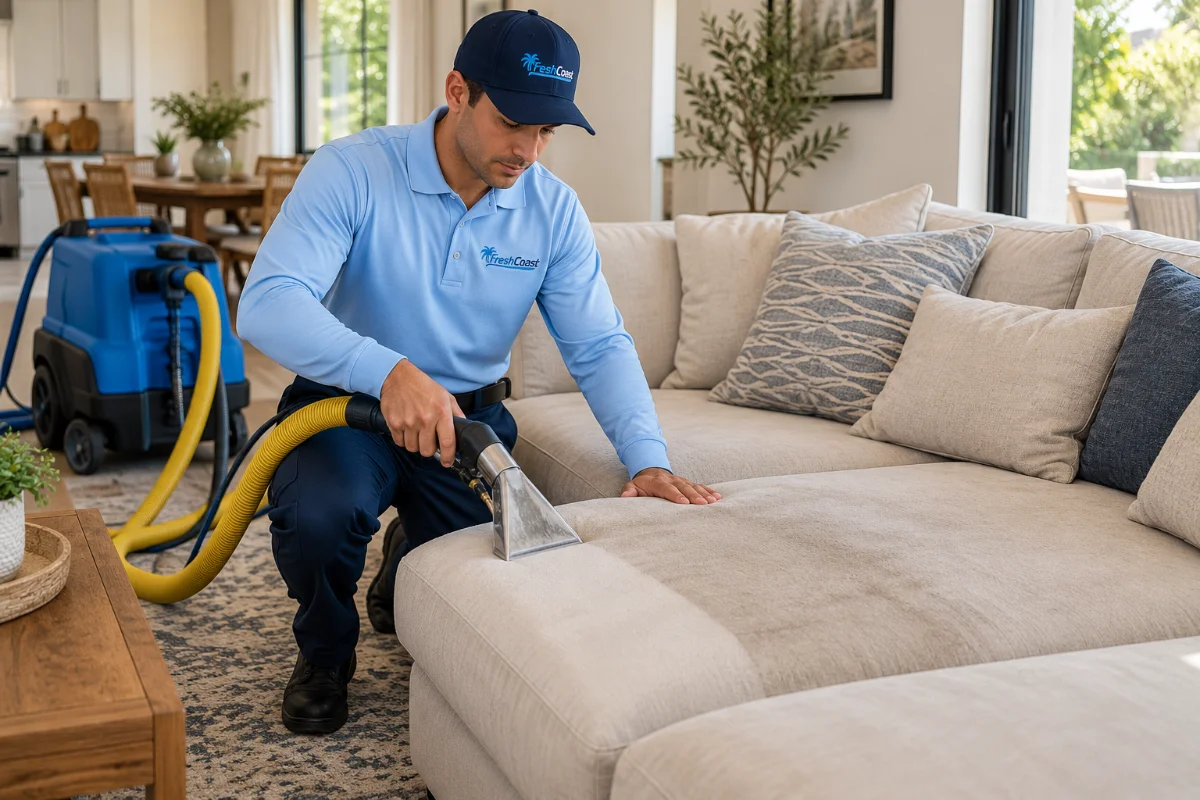
This guide sets honest expectations for what happens after your sofa is cleaned. You will learn normal dry times for professional low-moisture cleaning, the factors that speed drying up or slow it down, simple steps to dry cushions faster, and the warning signs that something used too much water.
Normal dry time: a few hours, not days
Professional upholstery cleaning uses low-moisture extraction: cleaning solution goes into the fabric through a hand tool and gets vacuumed straight back out in the same pass. Because most of the moisture is recovered immediately, cushions are left damp rather than wet. In normal indoor conditions that means dry to the touch within a few hours, and comfortable to sit on the same evening.
This surprises people who have only seen rental carpet machines, which can leave cushions soggy for a day or more. The difference is the equipment. A proper upholstery tool is small, applies solution sparingly, and extracts aggressively. If your cushions are still wet the next morning after a professional clean, that is worth a call back, not something to just wait out.
What slows drying down
Fabric type matters. Thick, dense fabrics like chenille or heavy cotton hold more moisture than tight synthetic weaves, so they take longer. Cushion construction matters too: loose back pillows dry faster than thick attached seat cushions with dense filling. Dark rooms with no air movement are the slowest scenario.
Weather plays a bigger role than most people expect. Humid, rainy days slow evaporation noticeably, while dry Santa Ana wind days speed it up. Indoor temperature helps as well: a cool house in winter dries slower than a warm one. None of this is a problem by itself, it just means planning. On a humid day, run the air conditioning or a fan to keep air moving.
How to speed up drying safely
Airflow does more than heat. Point a fan at the cleaned piece, or open windows on opposite sides of the room for cross-ventilation. If you have ceiling fans, run them. Air conditioning helps on humid days because it pulls moisture from the air. These simple steps can cut dry time substantially.
Stand loose cushions upright with space between them rather than leaving them flat and stacked; air reaching both sides dries them faster. Avoid the temptation of a hair dryer or space heater aimed directly at the fabric: concentrated heat can distort synthetic fibers and set any remaining spots. Gentle, moving room air is the fastest safe method.
When to sit on it again
The practical test is simple: press your palm firmly into the cushion for a few seconds. If your hand comes away dry and the fabric does not feel cool-damp, it is ready. Light use the same evening is fine for most professional cleans. Give it the full dry time before putting throw blankets back on, since covers trap moisture against the fabric.
One caution: body oils transfer more easily to damp fabric, so the freshly cleaned arms and headrests pick up soil faster if used while still moist. Waiting until fully dry keeps the clean looking clean. If you need the sofa urgently, sitting on a clean dry towel over the cushion is a reasonable compromise.
Warning signs of too much water
A musty smell developing a day or two after cleaning is the clearest sign the cushions stayed too wet. Mustiness means moisture lingered long enough for odor to develop in the filling. If you notice it, increase airflow immediately: fans, open windows, air conditioning. In most cases thorough drying clears it.
Other signs include water marks appearing as the fabric dries unevenly, or cushions that still feel wet 24 hours later. These point to over-wetting during the clean, which is a method problem, not a fabric problem. A reputable company will come back to re-extract and dry properly. This is one reason to choose a cleaner that uses low-moisture hand tools rather than a carpet wand on your sofa.
Do
- Run a fan or open windows for airflow after cleaning
- Stand loose cushions upright with space between them
- Test dryness with a firm palm press before regular use
- Run air conditioning on humid days to pull moisture from the air
Do not
- Aim a hair dryer or space heater directly at the fabric
- Put throw blankets back on before cushions are fully dry
- Assume soggy-next-morning cushions are normal after a pro clean
- Sit on damp arms and headrests, which pick up body oil faster
When it makes sense to call a professional
Dry time itself is rarely a reason to call, but the circumstances around it can be. Call if cushions are still wet the morning after a professional clean, or if a musty smell develops in the days after cleaning; both suggest over-wetting that needs re-extraction. Also call before booking if fast dry time matters to you: ask what method the company uses and what dry time they expect. Low-moisture hand-tool extraction should mean damp for hours, not wet for days.
Questions people ask
Can I speed up drying with a hair dryer?
It is not recommended. Concentrated heat can distort synthetic fibers and set remaining spots. A fan moving room air across the fabric dries faster and safely.
Why does my couch smell musty after cleaning?
Mustiness means the cushions stayed damp too long. Increase airflow immediately with fans and open windows. If it persists, call the company back; the cushions may need re-extraction.
Is it okay to sleep on the couch the night it was cleaned?
If it feels fully dry to a firm palm press, yes. If it still feels cool or damp, give it more time with airflow. Sleeping on damp cushions presses moisture deeper and transfers body oil to the fresh fabric.
Do thicker cushions take longer to dry?
Yes. Dense seat cushions hold more moisture than loose back pillows. Standing cushions upright with air reaching both sides helps them dry evenly.
What dry time should I expect from a professional?
With low-moisture extraction, damp for a few hours and usable the same day is normal. Ask the company before booking; if they cannot give you a straight answer, that tells you something.
Related services and guides
Want it done for you?
Tell us what you have and where. We will call you with a price.
(714) 244-2772Call or text · Open 7 days, 8am–5pm
- Same-day slots most days
- In-house technicians only
- Price confirmed before we start